Battery Info
Summary of Battery Buying and Recycling Practices: 
- As of January 1, 2026 Illinois Battery Stewardship Act provides recycling for most batteries
- If you purchase 12 or more batteries a year, rechargeable batteries will save you money.
- Rechargeable batteries contain heavy metals and must be recycled at special collection sites
- Please tape spent lithium batteries on terminal ends when held in storage or when transporting
- NEVER place any batteries in a recycling or garbage cart. It is or is becoming illegal.
-
Click this link for the website with the most up-to-date list of collection sites
.png)
Will County Premier Partner for nearly all Battery Recycling:
A-Team Recyclers
304 Gregory Ct
Shorewood
Monday-Thursday 8am-4pm
815-630-4308
Accepts all single-use batteries, all lithium batteries, all rechargeable batteries (including medium format batteries from E-bikes, etc)
Does NOT accept automotive or marine lead-acid batteries
Limit 30 batteries per vehicle
Call first for damaged batteries
A-Team will also accept batteries at Electronic Collection Events
Will County Partners for standard (small-format) single-use and rechargeable battery recycling:
Limit 30 batteries per person
- Braidwood's Fossil Ridge Library (sicne 2015)
- Crete Library (since 2015)
- HomerTownship
- Manhattan-Elwood Public Library
- Mokena Library
- New Lenox Public Library (since 2023)
- New Lenox Township (since 2023)
- Peotone Public Library (since Sept. 2015)
- Plainfield Public Library
- Three Rivers Public Library District (since 2015)
- Will County Land Use Office in Joliet
- White Oak Library District - Crest Hill location (since Sept. 2016)
- Will County accepts rechargeable and button batteries at it Electronic Collections.
Retail Locations Accepting Single-Use and Rechargeable Batteries:
- Batteries Plus
- Best Buy
- Home Depot
- Interstate Batteries (and all button batteries)
- Lowes
- Staples
- uBreakiFix
- Verizon
- Select Ace Hardware Stores
- Call The Battery Network at 1-877-723-1297 or visit www.batterynetwork.org
Retailers accepting Medium Format (E-Bike) Batteries include:
- REI
- efforts being made to add more
Retailers accepting spent or unwanted Lead-acid Batteries include:
- Batteries Plus
- Interstate Battery
- O'Reilly Auto Parts
- Napa Auto Parts
- Advance Auto Parts
Tips for Choosing a Battery
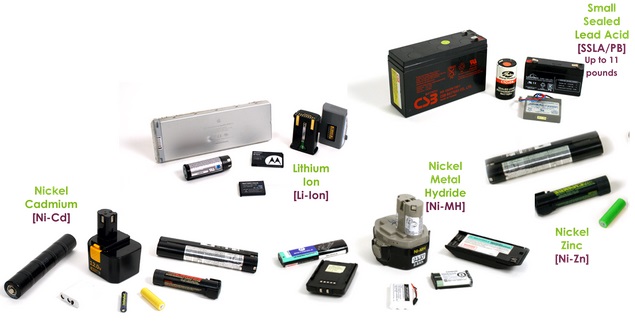
- If you purchase more than 12 batteries a year, switching to rechargeable batteries will save money and resources. Money will be saved because you are not replacing batteries, and not throwing out old batteries, means less batteries in area landfills. NiCd rechargeables are made from nickel and cadmium, these batteries usually last many years and are commonly best used in low-to-moderate discharge devices such as scanners, portable radios, cordless phones and power tools. These batteries require special handling at the end of their lifetimes. All retailers of NiCad Batteries accept these batteries for recycling through RBRC (Rechargeable Battery Recycling Corporation).
- Similarly, the Nickel-Metal Hydride batteries (NiMH)are also available in standard cylindrical sizes and differ from NiCads in their higher memory capacity and better recharge ability. Commonly they are used in digital cameras, laptops and cell phones.
- Lithium-Ion batteries are rechargeable and easily recycled through RBRC’s retail network. Lithium-ion battery terminals (positive and negative connections) must be covered by tape and stored in a cool area prior to recycling. Lithium-ion batteries have been known to overheat and therefore cause fires at recycling and garbage facilities due to uncovered terminals and mishandling. Always tape the ends of these batteries when storing for drop-off only recycling.
- Single use Lithium batteries are made with metallic lithium and need to be kept separate from recycling. Similar to Lithium ion batteries, single use Lithium batteries have also been known to overheat on rare occasions, so store in a cool area with tape on the ends.
- Alkaline batteries are the most common type of batteries. The premium version of alkaline manganese batteries are designed for high energy draining devices such as digital cameras and CD players. Manufacturers have been working to remove mercury from these batteries for decades and currently all types are either mercury-free or have an extremely low-mercury content. These batteries have basically replaced zinc-carbon and zinc-chloride batteries, which do not perform nearly as well. The EPA does not recognize these batteries as hazardous. They are also very difficult to recycle, so alkalines and zinc-based batteries should be sent to a landfill.
- Button batteries or silver oxide batteries are commonly used in hearing aids, watches and some cameras. These should always be recycled.
- Nearly everyone relies on lead-acid batteries. They are used in cars, boats, lawn equipment and more. Made of lead and containing acid, these batteries are banned from landfills. These batteries are accepted by some retail outlets when new batteries are purchased. They are also accepted at most scrap metal recyclers and some retail outlets when no purchase is being made. If you have a spare lead-acid battery, keep it stored in a cool, dry place until it can be taken to a recycler or appropriate retailer.
Still concerned about alkaline batteries? Click
here to see the results of a study of their components.
Illinois Passes Battery Stewardship Act
This Act sas signed into law in 2025 requiring manufacturers of batteries to fund battery collection for both single-use and rechcageable batteries throughout the State of Illinois. This battery collection program began on January 1, 2026.
The Battery Network website lists the collection sites in your area.
Updated 1/2/26